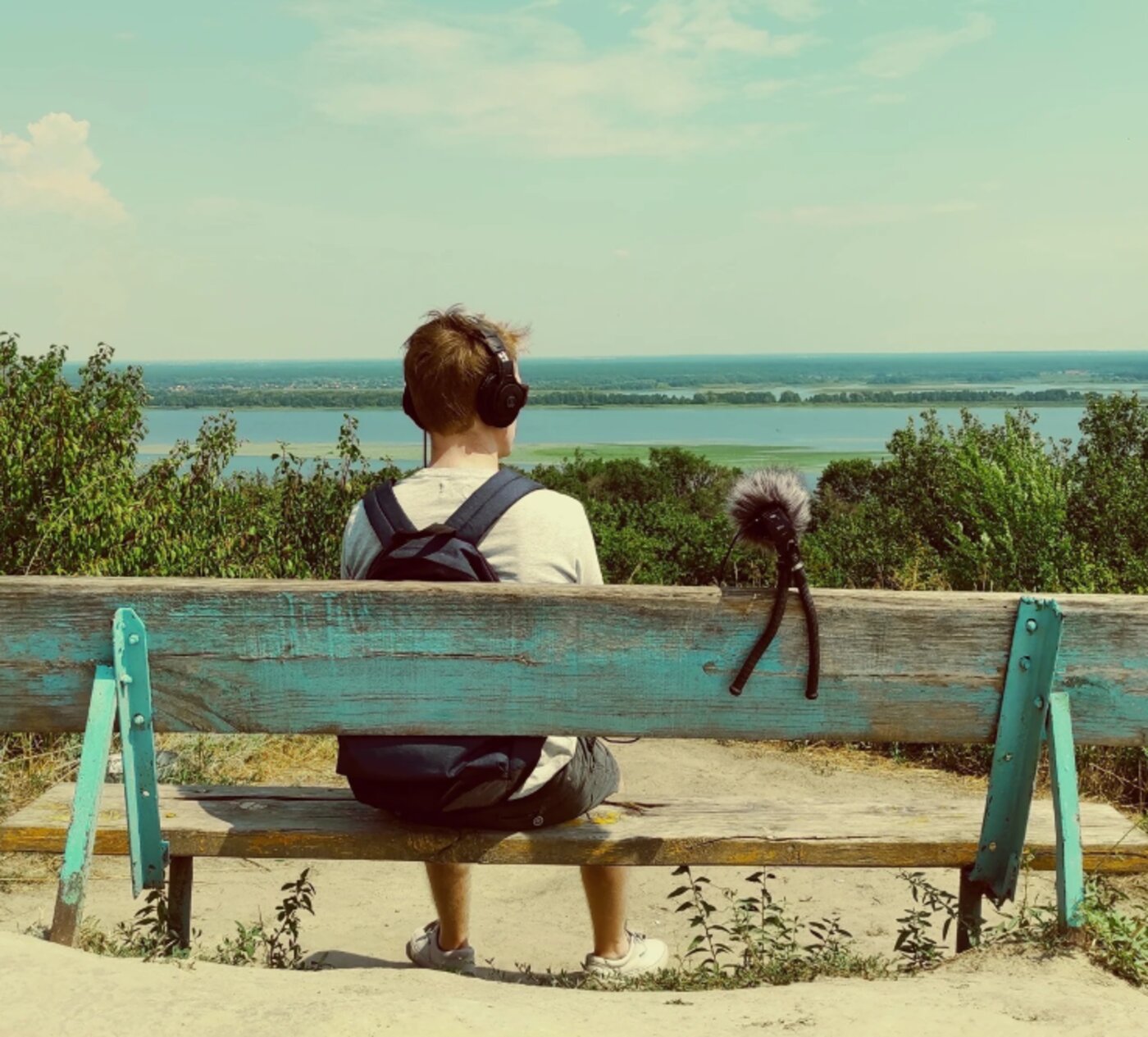
I travel to remote corners of the world to record unique soundscapes and share them with others - so that one day you might hear them in a new film or your favourite video game.
These days, I might be recording bats in the abandoned tunnels of São Tomé, making my way through the jungles of Borneo, or heading to Greenland’s only natural forest.
But how do people get into recording sounds?
In my case, what started as recording sounds just for fun with my son on weekends became something that changed my life.
Looking back, it feels like everything was slowly leading here.
…NextThe next chapter is already somewhere out there
What I love to record:
I like to record ambiences.
By ambiences, I mean the overall soundscape of a place — not individual sounds recorded in isolation.
Wild nature, mysterious silence in liminal spaces, the sounds of everyday life - every environment has its own voice.
Most of the time, I try to avoid human presence in my nature recordings. But it isn’t a strict rule. Sometimes human activity is simply part of a place and adds another layer to its character.
And then there are cities - frenetic, dense and full of overlapping sounds. In their own way, they can sound surprisingly similar to a jungle in the middle of the night.
How I record:
I let the environment unfold
It takes time for an environment to reveal itself. People appear and disappear, wind shifts, birds move through the space, distant sounds come closer and fade again. I pay attention to rhythm, repetition, silence, contrast and density, and I want these changes to remain part of the recording.
I intervene as little as possible
I keep processing to a minimum - usually just fades and light EQ. If a recording requires more, I prefer to skip it or re-record it again if possible.
I explore places in different ways
I experiment with different approaches depending on what I want to explore. Sometimes I document a place as a whole. Other times, I focus on a particular aspect of its environment - quiet spaces, different levels of traffic, or the same location changing through the seasons.
How I work:
I take responsibility for the whole product
For me, the work doesn’t end with the recording. I care about the whole product - from the quality of the audio to how it is organised, described and delivered. If I start something, I want to bring it to a proper finish.
I think from the listener’s side
I try to look at every library from the other side - whether it is clear, useful and easy to work with. I want to create something I would be happy to buy and use myself.
I do it because I want to
Soundweekends is not something I have to do. It is something I choose to spend my time, energy and money on. I love the process itself - travelling, listening, recording and gradually turning an idea into something that can remain even for future generations.
Why I do this:
To experience
Soundweekends gives me a reason to step outside my usual life, go somewhere I might never have gone otherwise, and experience the world differently. It makes me slow down, contemplate and follow the flow.
To preserve
Years later, sound recordings can bring back a particular moment, atmosphere and period of my own life. These are things I don’t want to let disappear with time. Over the years, I want Soundweekends to become a record of the world as I heard it - something I can return to myself and leave for future generations.
To share
I want to share these sounds and see them become part of the worlds other people create - in films, games and other forms of storytelling. In that way, something I heard and recorded in one place can become part of what someone else hears and experiences somewhere completely different.
Where I am recording next
BorneoNight jungle, wildlife and tropical weatherAutumn 2026
São ToméIsland rainforest, bats and coastal ambiencesWinter 2027
Southern GreenlandQinngua valley — the only natural forest in GreenlandSummer 2027
If you need specific sounds from any of these trips, get in touch and we’ll discuss the details.
I write only when a new library is out, and every time I send a few full‑length sounds from it - same quality as the library itself.
No series of emails afterwards.